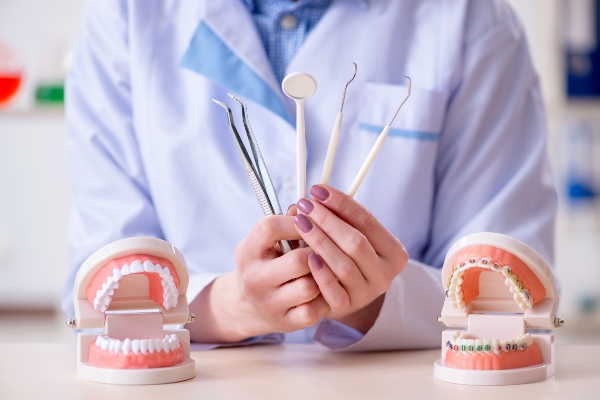
 Dental cleanings are the cornerstone of oral healthcare. Regularly scaling away plaque and tartar keeps the teeth healthy and prevents gum disease. It can also help treat sensitive teeth. That said, it is common to experience tooth sensitivity immediately after a dental cleaning, especially if the patient has not been to the dentist in a while. General dentists have tips and techniques to assist patients in managing tooth sensitivity after a professional cleaning.
What causes tooth sensitivity?
Tooth sensitivity is often due to the erosion of the tooth’s outermost layer, the enamel. However, it can also result from tooth decay. In addition, gum disease or teeth grinding can cause receding gums, exposing tooth roots and making the rest of the tooth surfaces sensitive.
How to manage tooth sensitivity related to dental cleanings
Dental cleanings do not cause tooth sensitivity but can cause it to flare up. This is because sensitive teeth may ache or be painful when dried for cleaning or when the general dentist or dental hygienist rinses the mouth with cold water. While the pressure necessary to scale tartar can also feel painful on sensitive teeth, the dentist will do everything possible to help ease sensation and keep the patient comfortable. Finally, as per Colgate, scaling away tartar may reveal exposed dentin or inflamed gums, which can feel painful or uncomfortable.
Managing tooth sensitivity during a dental cleaning
Fortunately, a general dentist and the dental hygienist can make accommodations during the dental cleaning to minimize how long tooth sensitivity is triggered. This includes:
- Using hand instruments instead of ultrasonic scalers
- Allowing the patient to take frequent breaks
- Limiting the use of cold water to rinse the mouth
Managing sensitive teeth after a dental cleaning
It is normal for the teeth to be extra sensitive after a dental cleaning. To manage this discomfort, a general dentist may recommend a fluoride treatment to help rebuild the enamel. Or, if a deep cleaning (scaling and root planing) was performed, the general dentist will likely recommend over-the-counter painkillers like ibuprofen for the first few days.
Other tips include brushing with a soft toothbrush and a nonabrasive toothpaste designed for sensitive teeth. If the teeth are still sensitive the night of the dental cleaning, brush extra gently. Floss with caution as well, making sure not to pop the floss into the gums.
Relieving tooth sensitivity for the long term
Dental cleanings help manage tooth sensitivity in the long run. While it may be tempting to skip a cleaning because of how sensitive a patient’s teeth may get, this only allows the cause of the sensitivity to progress. The enamel will continue to erode, or the decay will eventually extend into the tooth’s root. Therefore, dental cleanings every six months are crucial for patients with sensitive teeth.
Enhancing your comfort during a dental cleaning
There is no need to dread dental cleanings because of sensitive teeth. Our team at Maycer Dental strives to provide quality dental care efficiently. We can discuss how to minimize your tooth sensitivity during and after your next cleaning. Contact us today to get started.
Request an appointment or call Maycer Dental at 619-461-6040 for an appointment in our La Mesa office.
Related Posts
How often do dentists recommend that patients visit them for a professional dental cleaning? The answer might surprise some people. Dental professionals recommend that patients come in every six months for these cleanings. This seems like a lot at first glance, but it is essential to help teeth stay healthy and strong. Routine visits ensure…
Getting a dental cleaning according to your dentist’s recommendation can help keep your oral health intact. This treatment can remove the substances that can deteriorate teeth and gums. It can also prevent many dental problems from taking hold. Here are the details on how a dental cleaning can help maintain oral health.Regular dental cleaning can…
Dental cleanings are a preventative tool general dentists use to promote optimal oral health. These services are integral in preventing many issues. Still, decay and disease are the two most prevalent dental conditions in the United States. While different, these conditions can trigger one another and have a domino effect, triggering other conditions.While many are…