Improve Speech Pattern Changes With Denture Adjustments
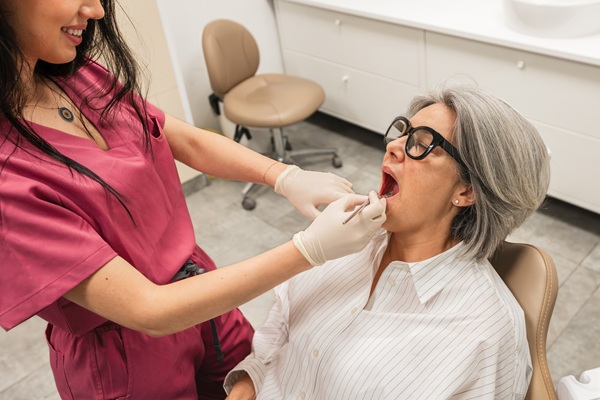
When discussing denture adjustments, the topic can extend beyond those performed by a dentist. Adjustments to your lifestyle can also help ease the transition as you get used to your new dentures. Whether this is your first set of dentures or you just got a replacement pair, you may notice discomfort in the mouth and awkward speech patterns as your mouth adjusts. Understandably, this can lead to embarrassment or discomfort in social situations. With practice and proper care, you can regain comfort and confidence in your new teeth and speech.
Five tips for denture adjustments
There are personal and lifestyle adjustments patients can regularly implement to improve their comfort, refine their speech patterns, and keep their smile straight as they adjust to new dentures.
1. Follow the dentist’s aftercare guidelines
After being fitted with new dentures, the patient will be educated on proper care and on adjusting to the oral prosthetic. Patients should always follow their dentist’s advice, as following aftercare guidelines will help their mouth recover and stay healthy. These may include taking medications as directed, practicing good oral hygiene, and purchasing a cleaning solution to soak the new dentures.
2. Talk and sing at home
The more that a patient talks with their new dentures, the faster they will adjust to having them in their mouth. At home, the patient does not need to worry about anyone hearing their lisp or awkward speech patterns. They can practice privacy and comfort.
While the patient may feel strange talking to themselves at home, this trick can speed up the adjustment period. Talking or singing along to a favorite song can help the mouth grow accustomed to the new dentures. Patients can also read the newspaper or a book aloud.
3. Eat soft foods
Early on, stick to soft foods that are easy on the mouth. The jaw and gums are already adjusting to having a new object — the dentures — in the mouth, so soft foods give the mouth time to rest. Taking small bites and eating slowly eases stress on the mouth. Patients can return to a normal, non-restrictive diet as they adjust to their dentures.
4. Remove dentures periodically
If the dentures are removable, the patient should remove their dentures every few hours to let their jaw, gums, and cheeks rest. The dentures should also be removed nightly and soaked in a glass with a cleaning solution.
5. Practice dental hygiene habits
Patients should always take proper care of their dentures. Regular brushing and cleaning can protect the mouth from tooth decay and gum disease. Good oral hygiene includes brushing, flossing, rinsing with mouthwash, and soaking dentures in a cleaning solution. If the patient’s gums become sore or unhealthy due to a lack of proper care, this may make the dentures even more uncomfortable. When talking causes the dentures to rub against sore spots, this can further affect the patient’s speech patterns.
Do you need denture adjustments?
While it is normal to feel mild looseness or soreness when adjusting to a new pair of dentures, these symptoms should fade over time. If you continue to experience discomfort, you may need denture adjustments performed by a dentist. Do not delay denture adjustment for too long because it may cause damage to your gums. Reach out to us at Maycer Dental to schedule an appointment.
Request an appointment here: https://www.maycerdental.com or call Maycer Dental at (619) 461-6040 for an appointment in our La Mesa office.
Check out what others are saying about our dental services on Yelp: Denture Adjustments in La Mesa, CA.
Related Posts
If you've ever had a deep cleaning for gum disease, you know the feeling afterward. Your mouth feels lighter. Cleaner. Like you've finally gotten ahead of something that had been quietly building for a while. And for most people, that feeling is the beginning of transformative healing.But every once in a while, there’s one stubborn…
A cosmetic dentist specializes in enhancing the appearance of the teeth, gums, and smile through various aesthetic treatments. While a general dentist focuses on overall oral health, there is a distinct difference between the two types of dental professionals in terms of their areas of expertise and the treatments they provide. Understanding the roles of…
Good oral health requires regular dental care and sometimes advanced treatments from dental specialists. While dentist perform preventive and standard procedures, complex dental issues may require the training and expertise of a dental specialist. Understanding this collaborative approach clarifies the referral process and emphasizes how dental teams support your long-term oral health.A specialist referral does…
A laser dentist can use focused light technology to make certain dental treatments more precise, comfortable, and efficient. Many patients feel nervous about dental care because they associate appointments with drills, pressure, or long recovery times. However, laser dentistry can offer a different experience for some procedures by targeting specific areas of the mouth while…